
Can Acupressure Really Help Ease a Hangover? An Acupuncturist Shares Four Pressure Points to Try
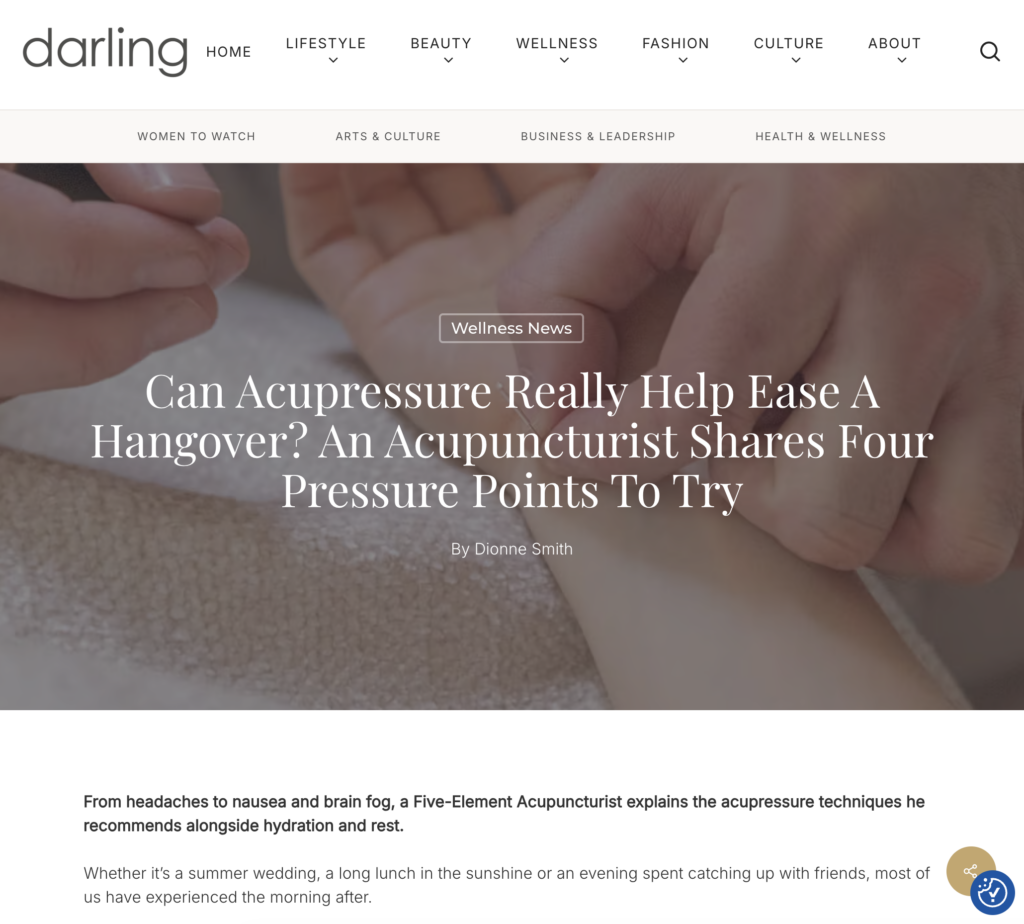
From headaches to nausea and brain fog, a Five-Element Acupuncturist explains the acupressure techniques he recommends alongside hydration and rest.
Whether it’s a summer wedding, a long lunch in the sunshine or an evening spent catching up with friends, most of us have experienced the morning after.
While there’s no magic cure for a hangover, some people turn to complementary therapies to help ease common symptoms such as nausea, headaches and brain fog.

According to Five-Element Acupuncturist Johnny Childs, gentle acupressure may offer temporary relief when used alongside the essentials: plenty of water, rest and allowing your body time to recover.
“From a Five-Element perspective, a hangover reflects dehydration, an overworked liver and a disruption to the stomach’s natural flow of energy,” explains Johnny.

Here are four pressure points he recommends trying at home.
For Nausea
Located on the inner wrist, around two finger-widths below the wrist crease, this pressure point is commonly used to help relieve feelings of nausea and dizziness.
For Temple Headaches
Found on the top of the foot between the big toe and second toe, this point is traditionally associated with supporting the liver and relieving tension headaches.
For Brain Fog
One of acupuncture’s best-known pressure points sits on the hand and is often used to encourage circulation and help ease head tension.

For That Heavy-Headed Feeling
According to Five-Element theory, gently stimulating the corner of the second toenail may help encourage the body’s natural downward flow of energy when you’re feeling sluggish or nauseous.
The Bottom Line
While acupressure isn’t a substitute for medical care or a guaranteed hangover remedy, many people find it a relaxing addition to rest, hydration and nourishing food after a night of celebration.
If symptoms are severe or persistent, seek advice from a healthcare professional.
Editor’s Note: Hangovers are best managed with hydration, rest and time. Complementary therapies such as acupressure may help some people feel more comfortable, but they shouldn’t be viewed as a replacement for medical advice or treatment.
by Dionne Smith