
Plantar fasciitis: why your summer shoes may be making it worse
Stretch your calves every day
Tight calves pull on the Achilles, which in turn tugs on the plantar fascia, so keeping them supple is one of the most effective things you can do.
“Tightness in the calves significantly increases the load through the plantar fascia,” explains acupuncturist Johnny Childs.
A simple standing calf stretch against a wall, held for 30 seconds on each side, two or three times a day, is a good starting point.
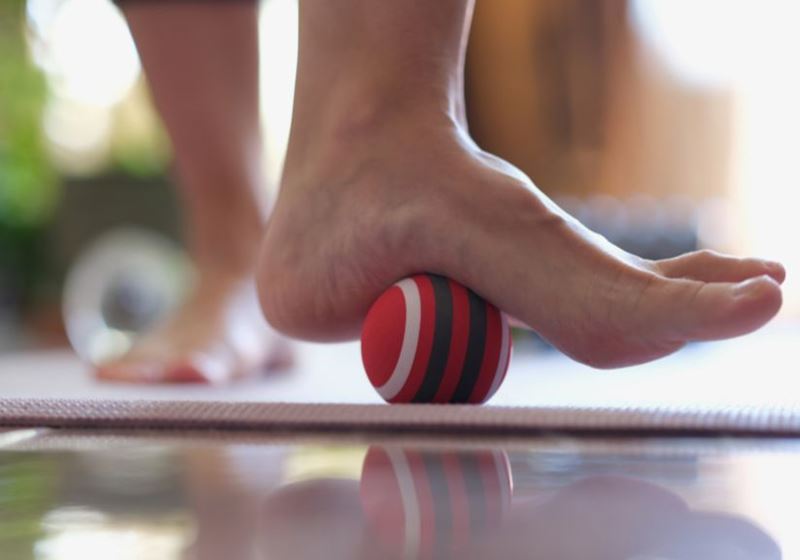
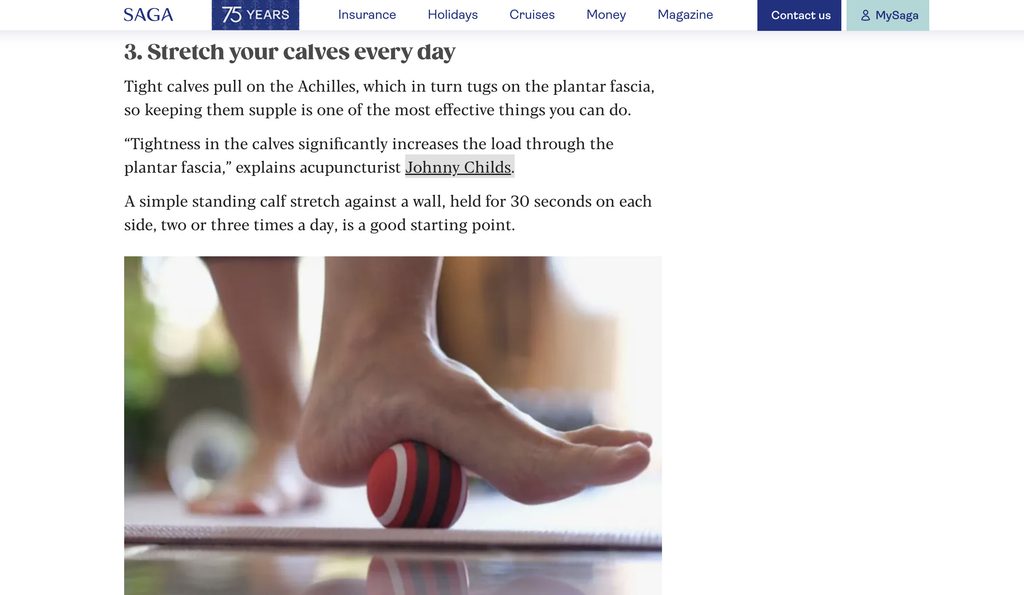
Roll your foot on a tennis ball or frozen water bottle
Childs recommends rolling the sole of the foot over a tennis ball to help release tension through the fascia. A frozen water bottle does the same job, adding a cooling, anti-inflammatory effect.
If you don’t have one to hand, simple pressure can be enough.
“Hold on any tender spots for 20 to 30 seconds to help release tension and improve circulation,” suggests Childs.
Do it while you’re watching television and you’ll barely notice the effort.
Try targeted self-massage
Beyond rolling the foot, working firm pressure into the calf muscle itself can help ease the strain pulling on your heel.
“Using a massage ball or your hands to apply pressure into the middle of the calf can help relieve symptoms,” suggests Childs. “Consistency is key – gentle daily work is far more effective than occasional, intensive treatment.”
Some people also find acupuncture helpful alongside other measures. A 2017 review of clinical trials found that acupuncture may reduce plantar fasciitis pain in the short term, with benefits typically seen within four to eight weeks of treatment.
Written by: Jayne Cherrington-Cook