
Acupuncture for Irregular Periods
SUPPORTING FERTILITY, IVF & REPRODUCTIVE HEALTH THROUGH A FIVE-ELEMENT APPROACH
A Five-Element approach to
Fertility care
Irregular cycles are rarely random
Irregular periods are often described as “just one of those things” — until you’re trying to conceive, managing PCOS, coming off hormonal contraception, or simply tired of living in a body that won’t keep time. In clinic, irregular cycles are rarely random; they’re usually a visible sign of a deeper pattern involving stress physiology, metabolic load, inflammation, thyroid function, or recovery after a demanding season.
Five-Element acupuncture doesn’t treat your cycle like a detached organ system. It looks at the whole person — sleep, mood, digestion, energy, and the way your body holds pressure — then works to support steadier rhythm over time.
“Best for fertility and renewal”

Beauty & Cosmetic Surgery Guide 2026
A Classical Five-Element Approach
Johnny Childs practises classical Five-Element acupuncture from Kite Clinic, Marylebone, and Liberty London.
His work is grounded in the classical tradition, with a contemporary focus on emotional health, fertility, and the regulation of the nervous system.
He supports people navigating fertility treatment, hormonal imbalance, stress, and complex or long-standing conditions, working at a deeper, constitutional level to restore balance over time.
"The cycle is a barometer, not just a symptom"
— Johnny Childs
Irregular Periods in Conventional Care
What doctors look for — and why results can still feel inconclusive
Clinically, irregular periods are usually investigated through history-taking and symptom mapping, alongside blood tests and scans. Common areas of focus include ovulation patterns, thyroid function, prolactin, and androgens; with PCOS, hypothalamic amenorrhoea, and perimenopausal transition often part of the conversation. Where appropriate, clinicians may recommend lifestyle adjustments, medication to support ovulation, or hormonal contraception to regulate bleeding patterns.
Yet a familiar frustration remains: some people sit in the grey zone — “normal enough” results with a cycle that still feels unpredictable. Others are told to “wait and see”, even when irregularity is affecting fertility timing, mood stability, or confidence in their body. This is often where patients begin exploring a more whole-system approach — one that takes stress load, nervous system tone, sleep debt and recovery seriously, rather than treating the cycle as a standalone issues.
IN THE PRESS

"calm moment in a stressful fertility journey"
Part therapy, part acupuncture – Johnny practices the Five Element system which focuses on unearthing the root cause of a problem before treating it. Consultations begin with a lengthy conversation. Tears are to be expected. Johnny is innately skilled at listening and shepherding the discussion to places you might not have been prepared to go and really gets to the core of your emotional state – as well as the physical. Warm and sincere, sessions are a calm moment in what can be an otherwise draining and stressful fertility journey. More than that, Johnny strives to help his clients feel more connected, purposeful and clear. Expect to leave feeling calmer and with a powerful sense of clarity.
Johnny has appointments at the prestigious Kite Clinic (he trained under the famed Gerard Kite) on Wimpole Street and Liberty.
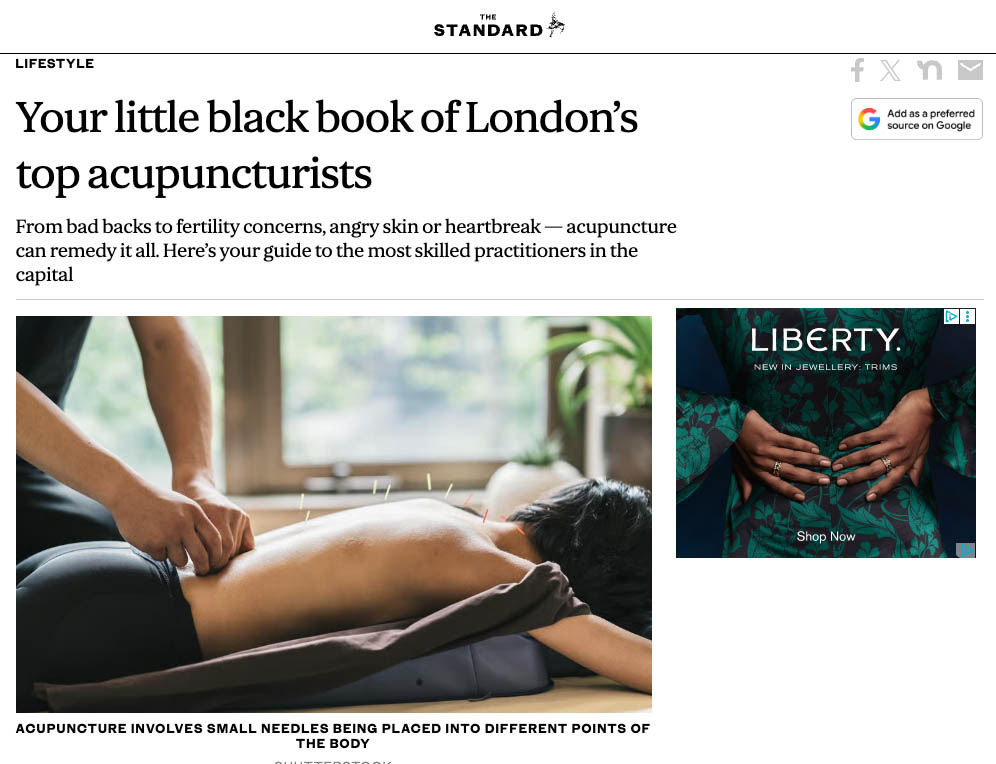
"leave feeling calmer and with clarity"
The Five Element Acupuncture Lens
A different way of understanding menstrual rhythm
In Five-Element acupuncture, irregular periods can be viewed as a reflection of how the body is managing demand. Menstrual rhythm is not simply a hormone chart — it’s the end-result of many systems coordinating: nervous system signalling, digestion and assimilation, blood flow, sleep quality, and the body’s ability to recover after stress.
Rather than chasing a single “fix”, treatment is shaped around the person in front of me: what steadies them, what drains them, and where they hold pressure. Over time, the aim is to support a body that can keep time again — not through force, but through improved regulation.
How acupuncture can help with irregular periods
Supporting regulation — so the cycle doesn’t have to shout
People often come for acupuncture when their cycle feels unpredictable: long cycles, short cycles, skipped periods, mid-cycle spotting, or bleeding that changes character month to month. While outcomes vary and depend on underlying drivers, acupuncture is commonly used to support the conditions that make rhythm more likely — particularly nervous system regulation, sleep, stress physiology, and pelvic circulation.
In fertility settings, this can be especially relevant when irregular cycles make ovulation difficult to predict, or when patients want to feel more connected to the signals of their body while working alongside medical care. The work is calm, structured, and responsive — and for many, it becomes a steadier thread through a process that can otherwise feel like constant monitoring.
“Johnny brought clarity and calm at a time when everything felt overwhelming. I finally felt seen & supported."
— Patient feedback
Appointments & Enquires
If you are considering acupuncture as part of your fertility journey, you are welcome to get in touch to discuss whether this approach feels appropriate for you. Appointments are available at Kite Clinic and Liberty London.



The Clinical Evidence
The Art of Timing
The Clinical Consensus: What NICE, the WHO, and the BMJ say about Acupuncture
In the refined world of modern reproductive wellness, the most discerning individuals are moving beyond a binary choice between clinical intervention and holistic support.
The World Health Organization (WHO) has long acknowledged the traditional role of acupuncture in supporting reproductive health, particularly its use in promoting emotional equilibrium and physical relaxation during what can be a demanding journey. Even within the prestigious dialogue of the British Medical Journal (BMJ), practitioners have explored how acupuncture serves as a sophisticated adjunctive therapy, helping to harmonise the body’s response to stress—a vital factor for those navigating the complexities of assisted conception.
While the NHS and NICE focus their guidelines on primary clinical outcomes, they recognise acupuncture as a safe, highly popular complementary choice for those seeking a more integrative experience.
Rather than a replacement for Western protocols, these bodies view it as a supportive tool for patient well-being. Whether used to foster a sense of calm during the critical windows of implantation or to manage the emotional rigours of an IVF cycle, acupuncture offers a “gold-standard” for self-care. It is the essential luxury of a well-supported path, providing a bridge between the precision of the lab and the timeless, restorative intelligence of the body.
Acupuncture FAQs for Irregular Periods
AREAS OF FOCUS WITH FERTILITY ACUPUNCTURE
Explore the areas most relevant to you, each approached within the wider context of your fertility journey.
Important note:
Acupuncture is a holistic and complementary therapy rooted in classical Chinese medicine, including Five-Element principles. Many people find it supportive alongside conventional medical care, particularly for stress regulation and overall wellbeing.Individual responses vary, and outcomes depend on the person, the condition being treated and the quality of available research. Acupuncture is not a substitute for medical diagnosis or treatment, and should be used as part of an integrated approach to health.