
Acupuncture for Implantation
SUPPORTING FERTILITY, IVF & REPRODUCTIVE HEALTH THROUGH A FIVE-ELEMENT APPROACH
A Five-Element approach to
Fertility care
When the body needs to become receptive
Implantation is not simply a moment, but a state.
A brief and exquisitely timed window in which the body must be calm, receptive, nourished, and responsive, physiologically and emotionally - in order to allow a pregnancy to take hold.
For many people, implantation becomes the most elusive part of the fertility journey. Embryos may be strong, cycles carefully managed, and treatment protocols followed precisely — yet implantation remains uncertain. This is often where acupuncture is sought: not to force an outcome, but to help the body enter the conditions in which implantation is more likely to occur.
“Best for fertility and renewal”

Beauty & Cosmetic Surgery Guide 2026
A Classical Five-Element Approach
Johnny Childs practises classical Five-Element acupuncture from Kite Clinic, Marylebone, and Liberty London.
His work is grounded in the classical tradition, with a contemporary focus on emotional health, fertility, and the regulation of the nervous system.
He supports people navigating fertility treatment, hormonal imbalance, stress, and complex or long-standing conditions, working at a deeper, constitutional level to restore balance over time.
"Implantation doesn’t respond to effort. It responds to readiness."
— Johnny Childs
Western Approach to treatment
Optimising the uterine environment
In conventional fertility care, implantation is primarily approached through measurable physiological factors: endometrial thickness, hormonal timing, uterine blood flow, and embryo quality. Treatment pathways may include hormone support, medicated or natural transfer cycles, immune testing, and protocol adjustments designed to optimise the uterine lining at precisely the right moment.
These tools are invaluable. Yet many patients find themselves in a frustrating grey area — where results appear “good enough,” embryos are viable, and timing is technically correct, but implantation does not occur. The focus can become increasingly narrow, while the broader systemic conditions that influence receptivity — stress response, nervous system regulation, circulation, and recovery — receive less attention.
This is often the point at which patients look for a more integrated approach.
IN THE PRESS

"calm moment in a stressful fertility journey"
Part therapy, part acupuncture – Johnny practices the Five Element system which focuses on unearthing the root cause of a problem before treating it. Consultations begin with a lengthy conversation. Tears are to be expected. Johnny is innately skilled at listening and shepherding the discussion to places you might not have been prepared to go and really gets to the core of your emotional state – as well as the physical. Warm and sincere, sessions are a calm moment in what can be an otherwise draining and stressful fertility journey. More than that, Johnny strives to help his clients feel more connected, purposeful and clear. Expect to leave feeling calmer and with a powerful sense of clarity.
Johnny has appointments at the prestigious Kite Clinic (he trained under the famed Gerard Kite) on Wimpole Street and Liberty.
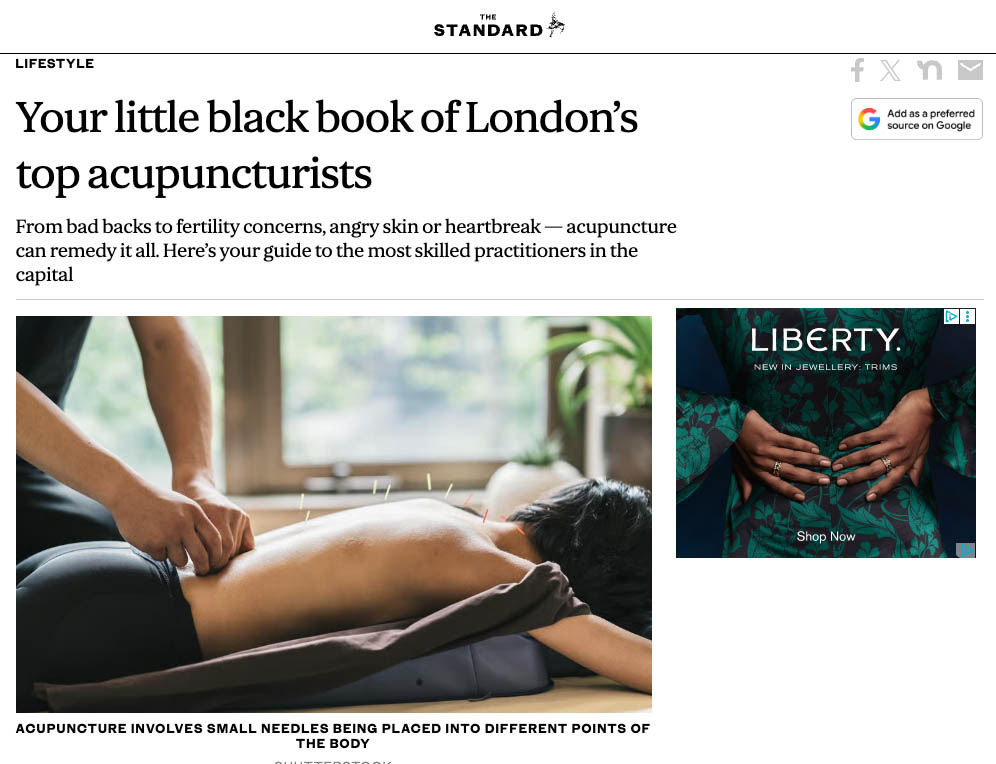
"leave feeling calmer and with clarity"
The Five Element Acupuncture Lens
Preparing the internal landscape
Five Element acupuncture views implantation not as a single event, but as the culmination of internal conditions. Rather than isolating the uterus or targeting hormones directly, treatment considers how the body as a whole is responding to cumulative demand — emotional, physical, and physiological.
From this perspective, implantation depends on:
-
A nervous system capable of settling rather than bracing
-
Adequate circulation to nourish and warm the uterine environment
-
Emotional processing following loss, failed cycles, or prolonged treatment
-
The body’s ability to transition from effort into receptivity
Five Element treatment works to restore coherence within the system, allowing the body to shift out of protection or vigilance and into a state more compatible with implantation.
How Acupuncture Can Help With Implantation
Creating the conditions for receptivity
Acupuncture is often used in the weeks and months leading up to embryo transfer, as well as immediately before and after transfer itself. Rather than acting on implantation directly, treatment aims to influence the systems that underpin it.
Patients commonly seek acupuncture to support:
- Regulation of the stress response during fertility treatment
- Improved pelvic and uterine blood flow
- Nervous system settling around transfer and the two-week wait
- Recovery following repeated implantation failure or pregnancy loss
- A sense of groundedness and trust in the body at a critical time
“Johnny brought clarity and calm at a time when everything felt overwhelming. I finally felt seen & supported."
— Patient feedback
Appointments & Enquires
If you are considering acupuncture as part of your fertility journey, you are welcome to get in touch to discuss whether this approach feels appropriate for you. Appointments are available at Kite Clinic and Liberty London.



The Clinical Evidence
The Moment the Body says Yes
The Clinical Consensus: What NICE, the WHO, and the BMJ say about Acupuncture
In the refined world of modern reproductive wellness, the most discerning individuals are moving beyond a binary choice between clinical intervention and holistic support.
The World Health Organization (WHO) has long acknowledged the traditional role of acupuncture in supporting reproductive health, particularly its use in promoting emotional equilibrium and physical relaxation during what can be a demanding journey. Even within the prestigious dialogue of the British Medical Journal (BMJ), practitioners have explored how acupuncture serves as a sophisticated adjunctive therapy, helping to harmonise the body’s response to stress—a vital factor for those navigating the complexities of assisted conception.
While the NHS and NICE focus their guidelines on primary clinical outcomes, they recognise acupuncture as a safe, highly popular complementary choice for those seeking a more integrative experience.
Rather than a replacement for Western protocols, these bodies view it as a supportive tool for patient well-being. Whether used to foster a sense of calm during the critical windows of implantation or to manage the emotional rigours of an IVF cycle, acupuncture offers a “gold-standard” for self-care. It is the essential luxury of a well-supported path, providing a bridge between the precision of the lab and the timeless, restorative intelligence of the body.
Acupuncture FAQs for Implantation
AREAS OF FOCUS WITH FERTILITY ACUPUNCTURE
Explore the areas most relevant to you, each approached within the wider context of your fertility journey.
Important note:
Acupuncture is a holistic and complementary therapy rooted in classical Chinese medicine, including Five-Element principles. Many people find it supportive alongside conventional medical care, particularly for stress regulation and overall wellbeing.Individual responses vary, and outcomes depend on the person, the condition being treated and the quality of available research. Acupuncture is not a substitute for medical diagnosis or treatment, and should be used as part of an integrated approach to health.