
Acupuncture for Sperm Quality
SUPPORTING FERTILITY, IVF & REPRODUCTIVE HEALTH THROUGH A FIVE-ELEMENT APPROACH
A Five-Element approach to
Fertility care
A Five-Element approach to male fertility and reproductive health
Sperm health is not simply a question of numbers on a lab report. It reflects the wider condition of the body — how well it is nourished, how deeply it rests, and how it responds to physical and emotional demand.
At Kite Clinic and Liberty London, Johnny Childs approaches sperm quality through classical Five-Element acupuncture, offering a refined, individualised approach to male fertility that looks far beyond the microscope — and into the system that produced the sperm in the first place. Male factor fertility contributes to approximately half of all conception challenges, yet men are still often invited into the conversation late — or only when a test result demands it.
In practice, many men present with:
- Low sperm count
- Reduced motility
- Abnormal morphology
- DNA fragmentation
- Or “borderline” results that offer no clear explanation
And yet are told everything is “fine enough” to proceed. This page exists to shift that narrative — towards optimisation, not just adequacy.
“Best for fertility and renewal”

Beauty & Cosmetic Surgery Guide 2026
A Classical Five-Element Approach
Johnny Childs practises classical Five-Element acupuncture from Kite Clinic, Marylebone, and Liberty London.
His work is grounded in the classical tradition, with a contemporary focus on emotional health, fertility, and the regulation of the nervous system.
He supports people navigating fertility treatment, hormonal imbalance, stress, and complex or long-standing conditions, working at a deeper, constitutional level to restore balance over time.
"Sperm quality is not a stand-alone issue — it is a reflection of how well the entire system is functioning."
— Johnny Childs
Sperm quality in conventional care
When male fertility deserves equal attention
In conventional fertility medicine, sperm health is assessed through semen analysis and, where needed, hormonal testing and genetic screening. These are essential tools and form a crucial part of any fertility journey.
However, many men are left in a frustrating middle ground:
-
Results that are ‘just within range’
-
No clear pathology
-
Little guidance on how to meaningfully improve outcomes
While testing shows what is present, it rarely explains why — or how the body arrived there.
This is where a Five-Element acupuncture approach offers a valuable clinical perspective.
IN THE PRESS

"calm moment in a stressful fertility journey"
Part therapy, part acupuncture – Johnny practices the Five Element system which focuses on unearthing the root cause of a problem before treating it. Consultations begin with a lengthy conversation. Tears are to be expected. Johnny is innately skilled at listening and shepherding the discussion to places you might not have been prepared to go and really gets to the core of your emotional state – as well as the physical. Warm and sincere, sessions are a calm moment in what can be an otherwise draining and stressful fertility journey. More than that, Johnny strives to help his clients feel more connected, purposeful and clear. Expect to leave feeling calmer and with a powerful sense of clarity.
Johnny has appointments at the prestigious Kite Clinic (he trained under the famed Gerard Kite) on Wimpole Street and Liberty.
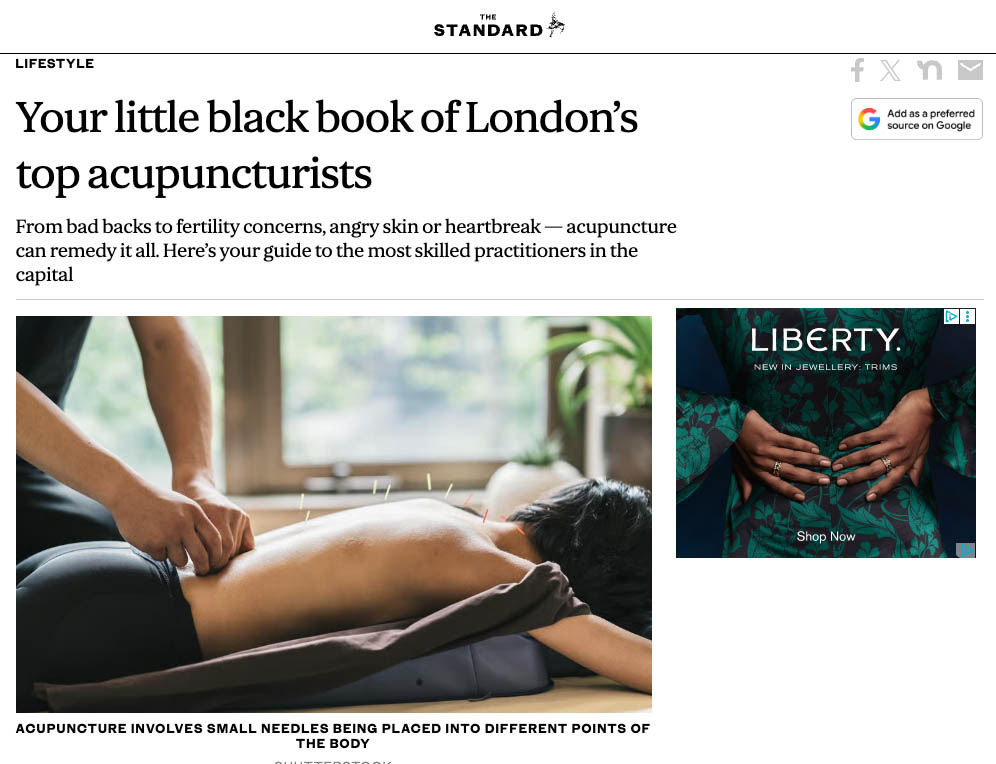
"leave feeling calmer and with clarity"
The Five Element Acupuncture Lens
Viewing sperm health through the whole system
Five-Element acupuncture does not treat sperm as an isolated output, but as the expression of the body’s deeper internal environment.
Rather than targeting semen parameters directly, treatment focuses on the conditions that allow healthy sperm to be produced, including:
-
Kidney system vitality – the classical root of reproductive strength and longevity
-
Liver regulation – ensuring smooth circulation, detoxification and hormonal signalling
-
Digestive function – supporting nutrient assimilation essential for sperm development
-
Nervous system balance – reducing stress patterns that impair sperm production
-
Emotional resilience – addressing chronic pressure, frustration and fatigue often overlooked in male fertility
In this model, improving sperm quality becomes the natural consequence of restoring internal coherence — not a forced intervention.
How Acupuncture Can Help With Sperm Quality
Creating the conditions for stronger fertility
Men often seek acupuncture for sperm quality during IVF preparation, fertility optimisation, or when conception is taking longer than expected.
Clinically, acupuncture is used to support:
- Circulation to the reproductive organs
- Regulation of the stress response
- Hormonal signalling
- Sleep quality and recovery
- Reduction of oxidative stress
- Emotional pressure associated with fertility treatment
“Johnny brought clarity and calm at a time when everything felt overwhelming. I finally felt seen & supported."
— Patient feedback
Appointments & Enquires
If you are considering acupuncture as part of your fertility journey, you are welcome to get in touch to discuss whether this approach feels appropriate for you. Appointments are available at Kite Clinic and Liberty London.



The Clinical Evidence
The Competitive Edge
The Clinical Consensus: What NICE, the WHO, and the BMJ say about Acupuncture
In the refined world of modern reproductive wellness, the most discerning individuals are moving beyond a binary choice between clinical intervention and holistic support.
The World Health Organization (WHO) has long acknowledged the traditional role of acupuncture in supporting reproductive health, particularly its use in promoting emotional equilibrium and physical relaxation during what can be a demanding journey. Even within the prestigious dialogue of the British Medical Journal (BMJ), practitioners have explored how acupuncture serves as a sophisticated adjunctive therapy, helping to harmonise the body’s response to stress—a vital factor for those navigating the complexities of assisted conception.
While the NHS and NICE focus their guidelines on primary clinical outcomes, they recognise acupuncture as a safe, highly popular complementary choice for those seeking a more integrative experience.
Rather than a replacement for Western protocols, these bodies view it as a supportive tool for patient well-being. Whether used to foster a sense of calm during the critical windows of implantation or to manage the emotional rigours of an IVF cycle, acupuncture offers a “gold-standard” for self-care. It is the essential luxury of a well-supported path, providing a bridge between the precision of the lab and the timeless, restorative intelligence of the body.
Acupuncture FAQs for Sperm Quality
AREAS OF FOCUS WITH FERTILITY ACUPUNCTURE
Explore the areas most relevant to you, each approached within the wider context of your fertility journey.
Important note:
Acupuncture is a holistic and complementary therapy rooted in classical Chinese medicine, including Five-Element principles. Many people find it supportive alongside conventional medical care, particularly for stress regulation and overall wellbeing.Individual responses vary, and outcomes depend on the person, the condition being treated and the quality of available research. Acupuncture is not a substitute for medical diagnosis or treatment, and should be used as part of an integrated approach to health.